“Aquaterra”: archaeologists explore submerged lands hiding human history
Researchers are studying submerged coastal areas known as “Aquaterra,” where traces of ancient settlements and technologies remain.
 🎓Education
Photo: UNIAN
Key points
- The term “Aquaterra” covers 22.5 million square kilometers of submerged land.
- Sea-level changes during ice ages concealed traces of ancient civilizations.
- Archaeologists use modern technology to search for artifacts on the seabed.
- Coastal erosion continues to destroy historical sites in the modern era.
Over the past 120,000 years, global sea-level fluctuations have significantly altered the world map. Back in 1999, geographer Jerome Dobson coined the term “Aquaterra” to describe vast coastal regions, totaling over 22 million square kilometers, that ended up underwater due to the melting of glaciers.
New frontiers in underwater archaeology
During glacial periods, the sea level was significantly lower, creating favorable conditions for human habitation on coastal plains. Today, scientists suggest that a significant portion of human cultural and technological progress occurred on these submerged lands, about which we still have limited knowledge.
Modern technology allows archaeologists to conduct excavations on the seabed by relying on data regarding ancient landscapes. In the Gulf of Mexico and off the coast of Belize, remains of ancient settlements, tools, and even Mayan production sites have already been discovered. At the same time, coastal erosion continues to threaten relatively newer historical sites, as seen on Roanoke Island in the United States.
Source UNIAN — unian.ua/science/pid-vodu-pishla-susha-rozmirom-iz-pivnichnu-amerik… ↗
Read next
 ⚽Sport
Alexander Zverev reaches the ATP Finals 2026 championship match
The world number one defeated Daniil Medvedev in the semifinals in Turin and will face Carlos Alcaraz for the title.
 💡Tech
FBI investigates repeated breach of key law enforcement database
The FBI is investigating another unauthorized access to the National Crime Information Center. This is the second such incident in recent months.
 🚨Events
Tragedy in Cherkasy: car with deceased women recovered from the Dnieper River
Two women died after their car drove into the Dnieper River in Cherkasy. Police have launched an investigation into the incident.
 🎭Culture & Sport
Money Tree Care Secrets: How to Grow a Strong Crassula in Odesa Homes
Experts shared recommendations on choosing lighting, watering regimes, and proper pruning of Crassula to create a thick canopy.
 🛡️Security
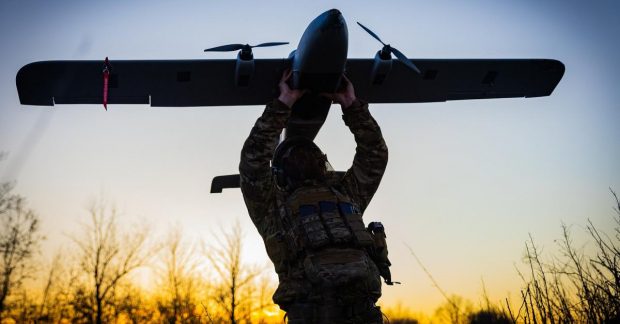
UK to Finance Mass Production of Ukrainian Long-Range Drones
The Ministries of Defense of Ukraine and the UK have signed an agreement to jointly produce middle and deep strike drones for the Armed Forces of Ukraine.
 🏛️Politics
Political analyst explains Putin's refusal to attend G20 summit as fear and isolation
Expert Yuriy Bogdanov believes that the Russian president's refusal to travel to the G20 summit in Miami is driven by paranoia and a desire to avoid diplomatic snubbing.